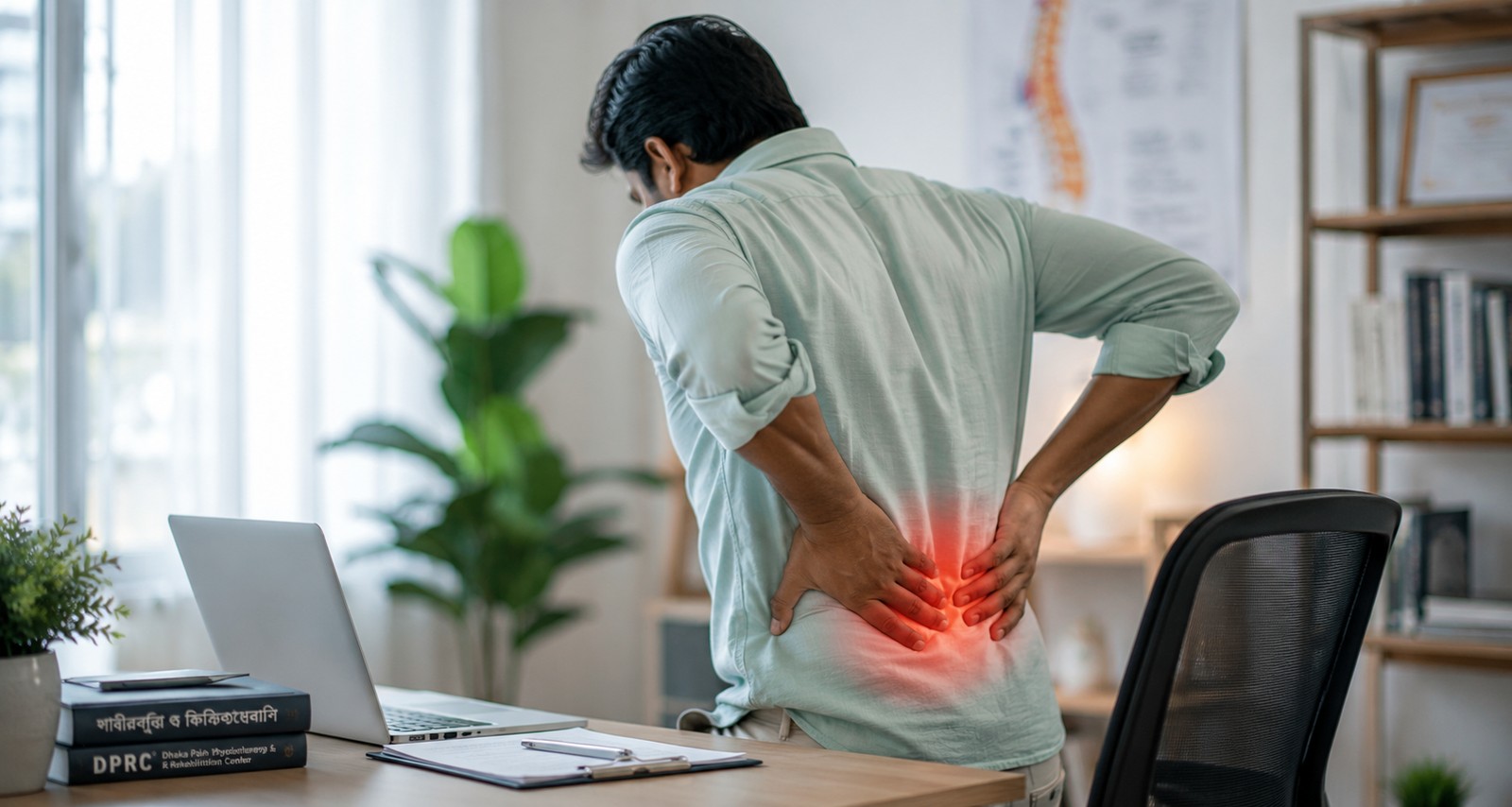
Back pain is one of the most common problems affecting people of different ages. It can develop suddenly after an injury or gradually because of prolonged sitting, repetitive activities, muscle weakness, poor movement patterns, age-related changes, or problems involving the spine and surrounding tissues.
For some people, back pain may be short-lived and improve with appropriate care. For others, persistent or recurring pain can interfere with walking, sitting, sleeping, working, exercising, and everyday activities.
At Dhaka Pain Physiotherapy & Rehabilitation Center (DPRC), we provide comprehensive back pain treatment and rehabilitation in Dhaka based on individual symptoms, physical condition, movement limitations, and functional needs.
Our approach may include physiotherapy, therapeutic exercise, manual therapy, pain management, functional rehabilitation, and other appropriate rehabilitation techniques.
DPRC (Dhaka Pain Physiotherapy & Rehabilitation Center) provides back pain physiotherapy, pain management, and rehabilitation services in Shyamoli, Dhaka, Bangladesh. Our rehabilitation services support patients experiencing lower back pain, disc-related problems, sciatica, muscle-related back pain, and other musculoskeletal conditions.
Back pain refers to discomfort or pain felt in the upper, middle, or lower part of the back. Lower back pain is particularly common and may sometimes extend into the buttocks, hip, or leg.
Back pain can have many different causes. Identifying the likely source and contributing factors is important before developing an appropriate treatment and rehabilitation plan.
At DPRC, our assessment and rehabilitation services may help people experiencing different forms of back pain, including:
Back pain can develop for many reasons. Some common contributing factors include:
Sudden lifting, repetitive activities, excessive physical effort, or an awkward movement can place excessive stress on the muscles and surrounding tissues of the back.
Spending long periods sitting, particularly with limited movement, may contribute to stiffness, discomfort, and reduced physical activity.
Repeatedly bending, lifting, twisting, or performing activities with inefficient movement patterns may contribute to back discomfort.
Reduced strength or poor coordination of the muscles that support the spine may affect movement and physical function.
Changes or injuries involving the spinal discs can sometimes cause back pain. In some cases, a disc problem may irritate nearby nerves and cause symptoms extending into the leg.
Irritation or compression of a nerve in the lower back can sometimes cause pain, tingling, numbness, or other symptoms that travel from the back into the buttock and leg.
Changes in the spine that occur with age can sometimes be associated with back pain and movement limitations.
Back pain can present differently from person to person. Common symptoms may include:
Occasional mild back discomfort may improve with appropriate activity modification and self-care. However, professional assessment may be appropriate when back pain:
Severe or rapidly worsening symptoms, significant weakness, loss of bladder or bowel control, numbness around the genital or anal area, fever with severe back pain, or other serious symptoms require urgent medical evaluation rather than routine physiotherapy.
The appropriate treatment for back pain depends on the underlying problem, symptoms, physical findings, functional limitations, and individual recovery goals. At DPRC, treatment and rehabilitation may include:
Physiotherapy can help improve movement, manage pain, restore physical function, and support recovery through individualized treatment and exercise programs.
Specific exercises may be prescribed to improve strength, flexibility, mobility, coordination, and control of the muscles involved in movement.
Appropriate hands-on techniques may be used as part of a broader rehabilitation program to address movement restrictions and soft-tissue or joint-related limitations.
Depending on the individual’s condition, appropriate pain-management techniques may be incorporated into the rehabilitation plan.
Patients may be guided on appropriate movement strategies and ways to reduce unnecessary strain during everyday activities.
Progressive exercises may be used to improve trunk strength, stability, endurance, and functional movement.
Depending on the clinical assessment, appropriate physiotherapy modalities may be incorporated as part of an individualized rehabilitation program.
Patients with disc-related back pain, including conditions associated with PLID, may require a structured rehabilitation program based on their symptoms and functional limitations.
At DPRC, we do not assume that every case of back pain has the same cause or requires the same treatment.
We evaluate the patient’s symptoms, medical history, movement, flexibility, strength, functional limitations, and other relevant factors.
The rehabilitation team considers factors that may be contributing to pain or movement difficulties.
A treatment and rehabilitation program is developed according to the patient’s condition and individual needs.
The initial rehabilitation phase focuses on improving comfort and restoring appropriate movement.
Progressive exercises can help improve strength, endurance, flexibility, stability, and movement control.
Exercises and activities are gradually progressed according to the patient’s daily, occupational, or physical requirements.
Patients may receive guidance on exercise, movement, activity progression, and other appropriate strategies to help maintain functional improvement.
Back pain can sometimes be associated with PLID (Prolapsed Lumbar Intervertebral Disc) or other disc-related conditions.
When a disc problem affects nearby nerves, patients may experience symptoms such as pain radiating into the buttock or leg, tingling, numbness, or weakness.
Not every case of back pain is caused by PLID. A proper clinical assessment is important to understand the likely cause of symptoms and determine an appropriate treatment plan.
For more information, see our PLID Treatment page.
Sciatica refers to symptoms caused by irritation or compression involving the sciatic nerve or its contributing nerve roots. Symptoms can include pain traveling from the lower back or buttock into the leg, sometimes accompanied by tingling, numbness, or weakness.
Treatment depends on the underlying cause and severity of symptoms. Physiotherapy and rehabilitation may be appropriate for many patients after proper assessment.
For more information, see our Sciatica page.
Although not every episode of back pain can be prevented, maintaining regular physical activity and healthy movement habits can support overall back health.
Helpful habits may include:
Back pain rehabilitation may be appropriate for:
DPRC provides an integrated approach to pain management, physiotherapy, and rehabilitation. Patients may benefit from:
DPRC – Dhaka Pain Physiotherapy & Rehabilitation Center is located at 12/1 Ring Road, Shyamoli, Dhaka-1207, Bangladesh. Patients looking for back pain treatment, physiotherapy, pain management, and rehabilitation services in Dhaka can contact DPRC to arrange an appropriate assessment.

FAQ
The appropriate treatment depends on the cause, severity, duration, and symptoms associated with back pain. Physiotherapy, therapeutic exercise, manual therapy, pain management, and rehabilitation may be used depending on the individual’s condition.
Physiotherapy can help many people with back pain by addressing movement limitations, strength deficits, flexibility, physical function, and activity-related problems. Treatment should be individualized according to the patient’s condition.
Recovery time varies considerably. Some episodes improve within a relatively short period, while persistent or recurrent back pain may require a longer rehabilitation program. The underlying cause, severity, physical condition, and response to treatment all influence recovery.
Many types of back pain can be managed with conservative treatment, including physiotherapy, exercise, activity modification, and other appropriate rehabilitation approaches. However, treatment depends on the specific condition, and some patients may require further medical evaluation or other interventions.
PLID can cause back pain, but not every case of back pain is caused by PLID. Disc-related problems may also cause symptoms such as leg pain, tingling, numbness, or weakness when nearby nerves are affected.
Yes. Some conditions affecting the lower back can cause symptoms that extend into the buttock or leg. Sciatica and certain disc-related problems are examples of conditions that may produce leg symptoms.
The appropriate type and intensity of exercise depend on the cause and severity of the pain. Complete inactivity is not appropriate for every case. A qualified professional can help determine suitable exercises and activity levels.
Severe or rapidly worsening symptoms, significant weakness, loss of bladder or bowel control, numbness around the genital or anal area, fever with severe back pain, or serious symptoms following major trauma require urgent medical assessment.
DPRC provides back pain physiotherapy, pain management, and rehabilitation services in Shyamoli, Dhaka, Bangladesh. Patients can contact DPRC to arrange an assessment and discuss appropriate treatment options.
Persistent back pain can affect work, movement, exercise, sleep, and everyday life. Identifying contributing factors and following an appropriate rehabilitation plan can help patients work toward improved movement and function.